
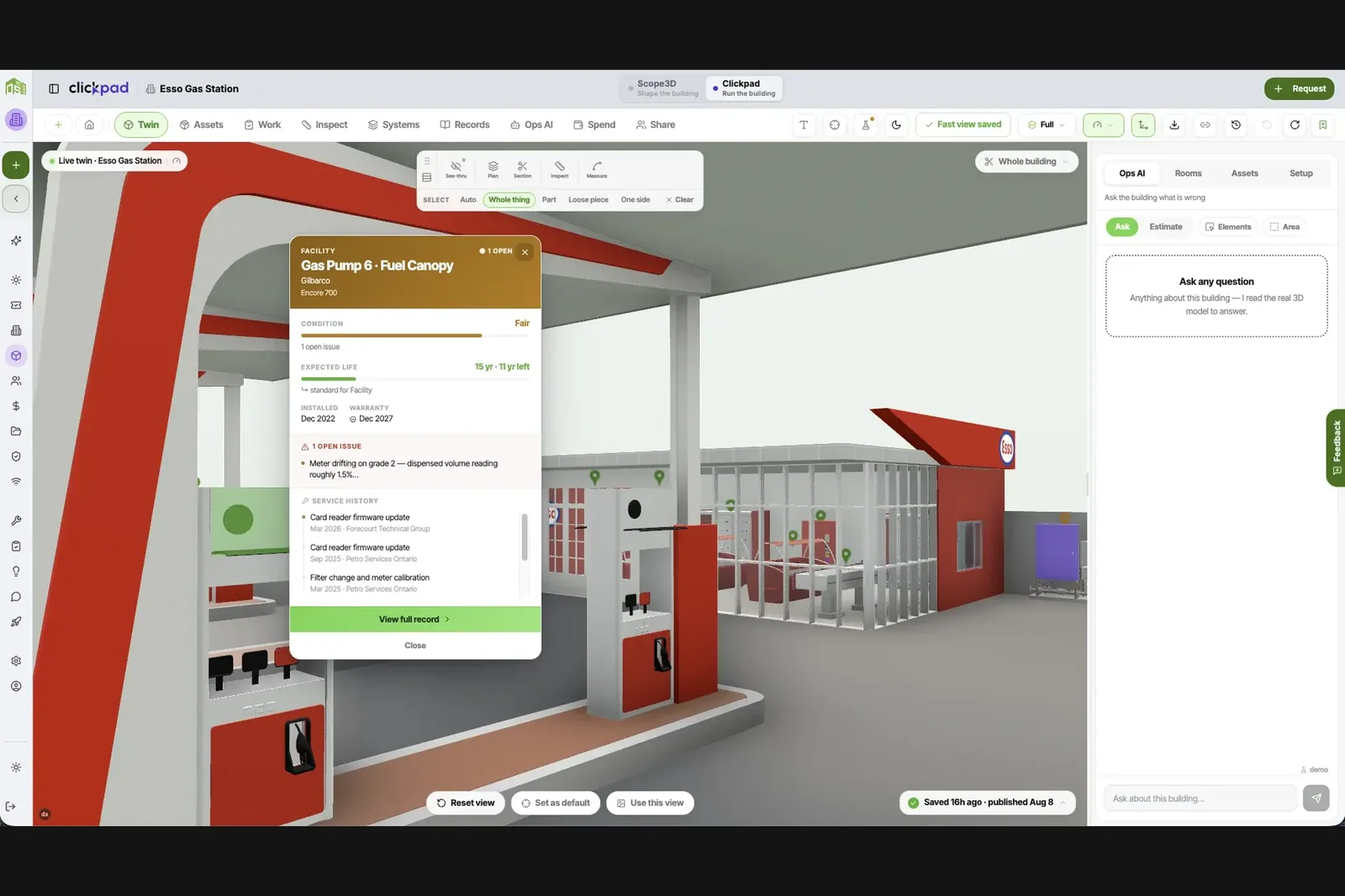
The gap between noticing a problem and recording it is where most maintenance backlogs are born. Somebody sees a fault, means to report it properly later, and by the end of the shift it has become a note that never got written and a job that nobody scheduled.
A tag on the asset closes that gap to a few seconds. Staff scan the QR code or tap the NFC tag with any phone they already own, and the report is logged against that exact asset — no app to install, no account to create, no form asking which building they are standing in.
What the scan carries is what makes it useful later rather than at the time. It is geo-tagged, timestamped, and tied to that asset's full service history, so the report arrives already knowing which unit it refers to and what has happened to that unit before.
That removes the most common failure in field reporting, which is not laziness but ambiguity. "The heater in the back room" is a triage problem that costs somebody a phone call and a site visit to resolve. A scan is not a triage problem; it is a location and an object.
Tags can also go where the public can reach them, which is where the reporting volume actually is. A restroom in a fuel station, a guest room in a hotel, a lobby, a lift car — anyone can scan and report without an account and without working out who they are supposed to tell.
For scheduled inspections the same tags turn a clipboard into a route. Scanning each one in turn produces a timestamped record of what was checked and when it was checked, which is the part that matters when a compliance question is asked six months afterwards.
The reason a tag beats a form is friction, and friction is measurable. Every additional step between noticing the fault and recording it loses reports, and the reports lost first are always the small ones — the dripping tap, the flickering ballast, the door that has started to catch — which are also precisely the ones that, left alone long enough, become the expensive ones.
There is a cultural effect as well. When reporting is genuinely effortless, reporting stops being something people do when a problem is bad enough to be worth the hassle, and starts being something they do because it took four seconds.
It works perfectly well on buildings with no model at all. The tag is attached to a physical asset in a physical location, and a twin, where one exists, simply provides a second route to the same record for whoever is at a desk rather than on site.
Deployment is the only real work involved, and it repays care. Tag the assets that matter rather than everything, and put each tag where the person who notices the fault will actually be standing when they notice it.
After that the reporting largely takes care of itself, which is the point. The best field process is the one that does not require anybody to remember it.