 Clickpad copilotScreenshot
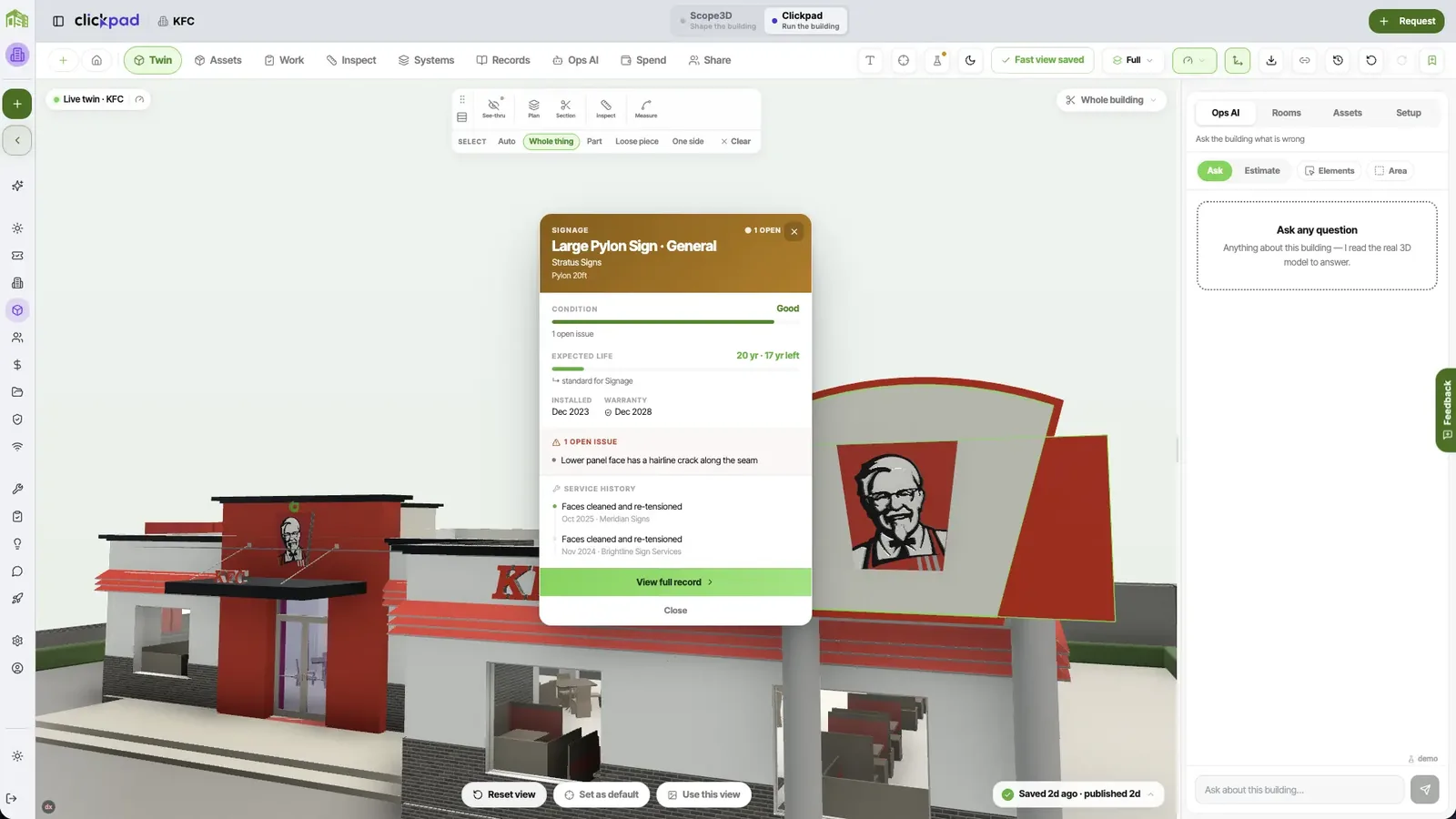
KFC sits in Clickpad as a register of 148 assets. The entryway and the finishes on it, the dining room with its fixed booth seating and tables, the counter, and the line and cold side in the back of house — each one entered against the place it actually stands, so it is opened from the floor plan rather than found in a row of a spreadsheet.
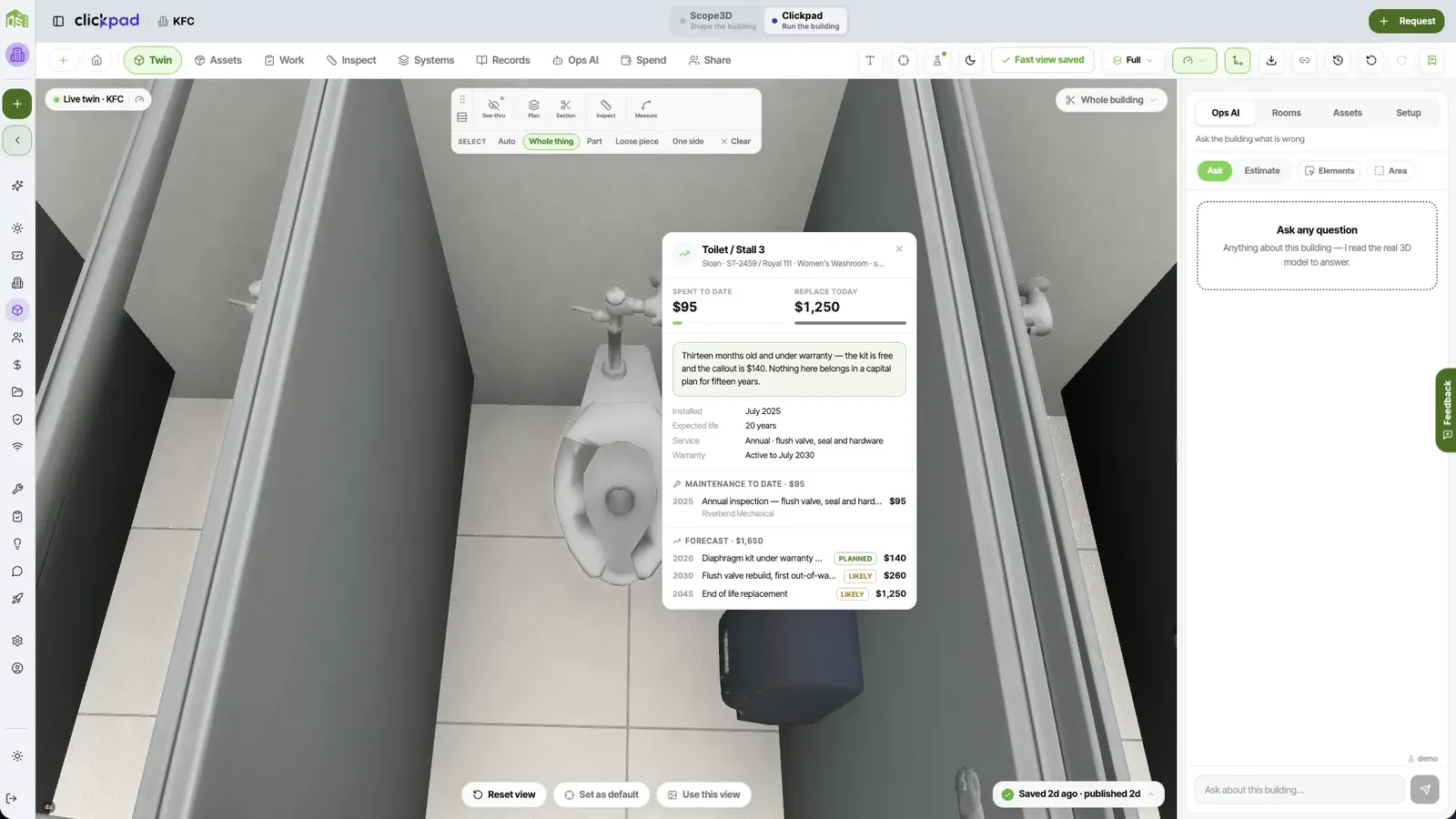
An asset page is not a specification sheet. The specs are on it, and under them sit the service logs and a history timeline: what was done, when, and against which job it was raised. Booth B4 on the dining room floor reads as a sequence rather than a status — the seat refoamed, the pedestal re-anchored after a wobble report, a deep clean and leather conditioning. The tear along the seat seam and the lifting edge banding on the table land against that history instead of arriving on their own.
Interior finishes are entered the same way, against the surface that carries them rather than as a job filed under a date. A painted wall holds the contractor who applied it, the day it went on and the workmanship warranty term that came with it, so a coating that starts to lift is read next to who put it there and whether the term is still running. Every asset also carries a section for what we do not know about it — a missing serial, no install date, no manual on file, a service interval nobody has confirmed — written down as a gap rather than left as an assumption.
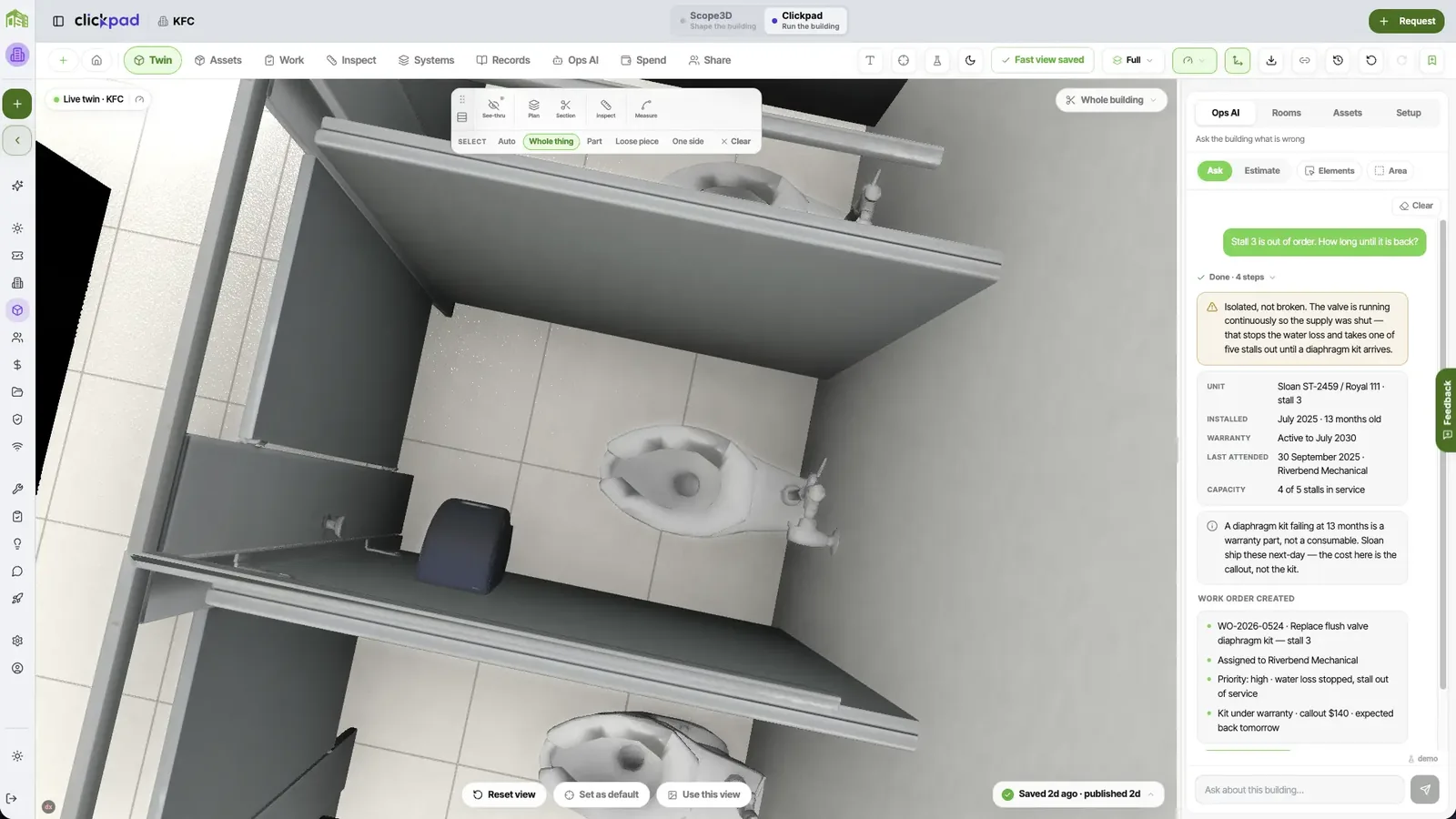
The copilot is per property. Asked about the paint at the entryway, it answers out of this restaurant’s register: who applied it, when, what the warranty term was and whether it has run out. It will also say what the timing suggests, that peeling at an entryway two years in reads as a moisture problem rather than a wear one, because the record it is reading holds the exposure the surface sits in as well as the date on it.
Maintenance runs off the same entries. Intervals live on the asset, so a booth or a piece of line equipment past its own interval is visible as itself and not as a line in a schedule kept somewhere else. CapEx planning is a separate hub reading the same register — the assets, their ages, their histories and the work already done to them — so a repaint or a reupholstery round is planned against what is recorded rather than against what is remembered.