 Clickpad copilotScreenshot
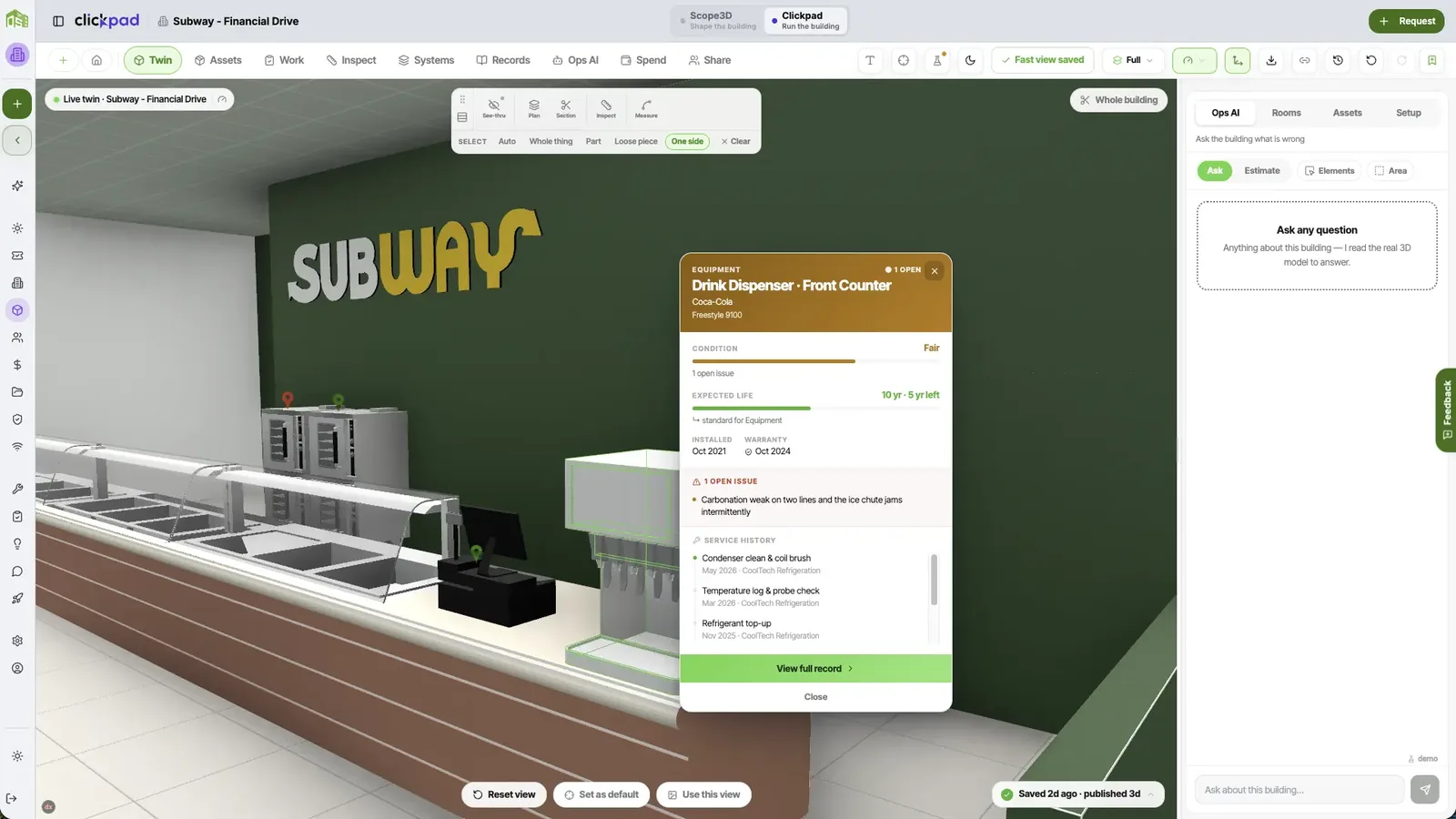
Subway sits in Clickpad as a register of 96 assets. The equipment on the service line, the refrigeration and the ovens behind it, the fit-out of the dining room, and the roof and envelope over all of it — each one entered against the place it actually stands, so it is opened from where it sits rather than looked up by an asset number.
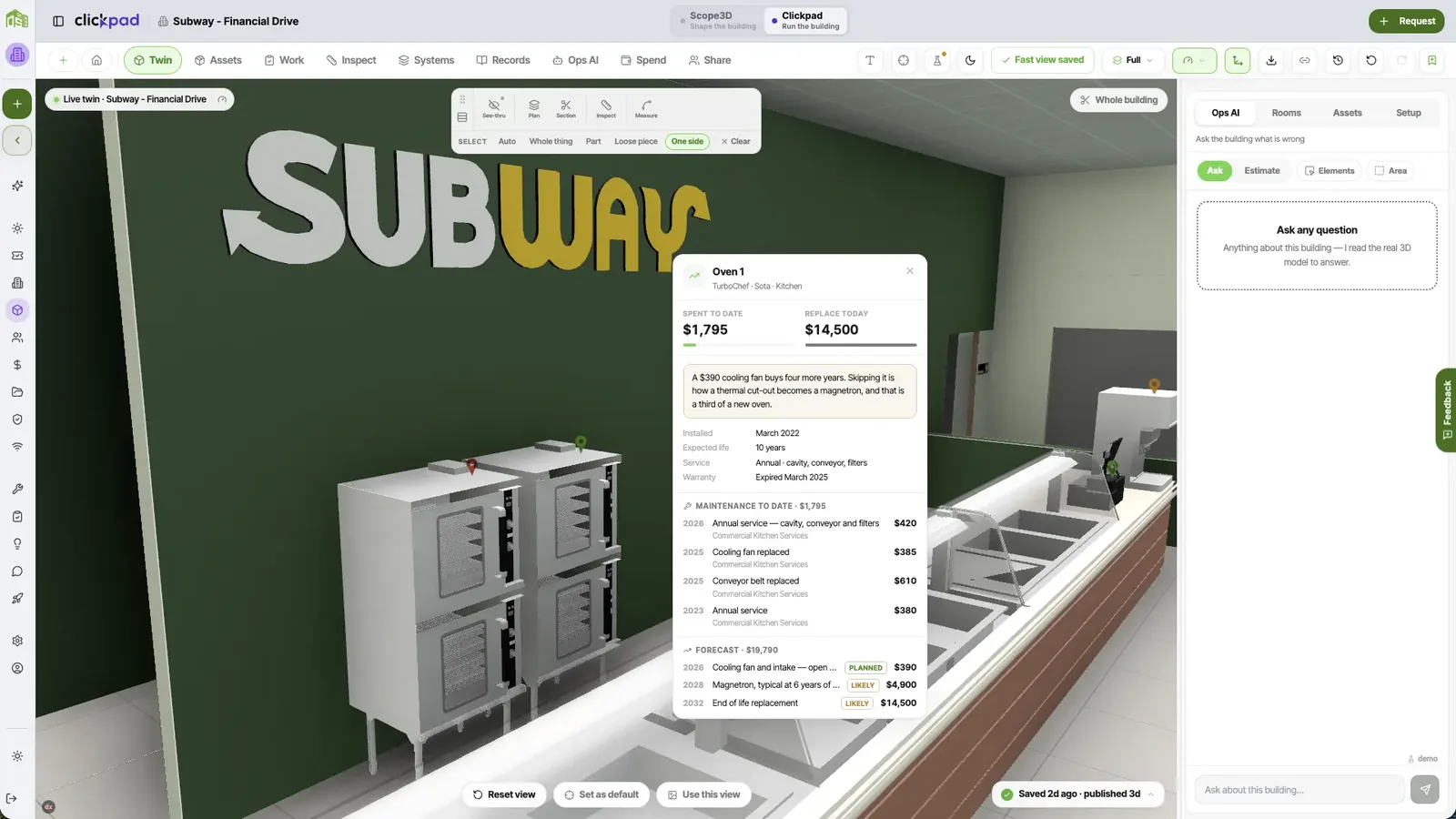
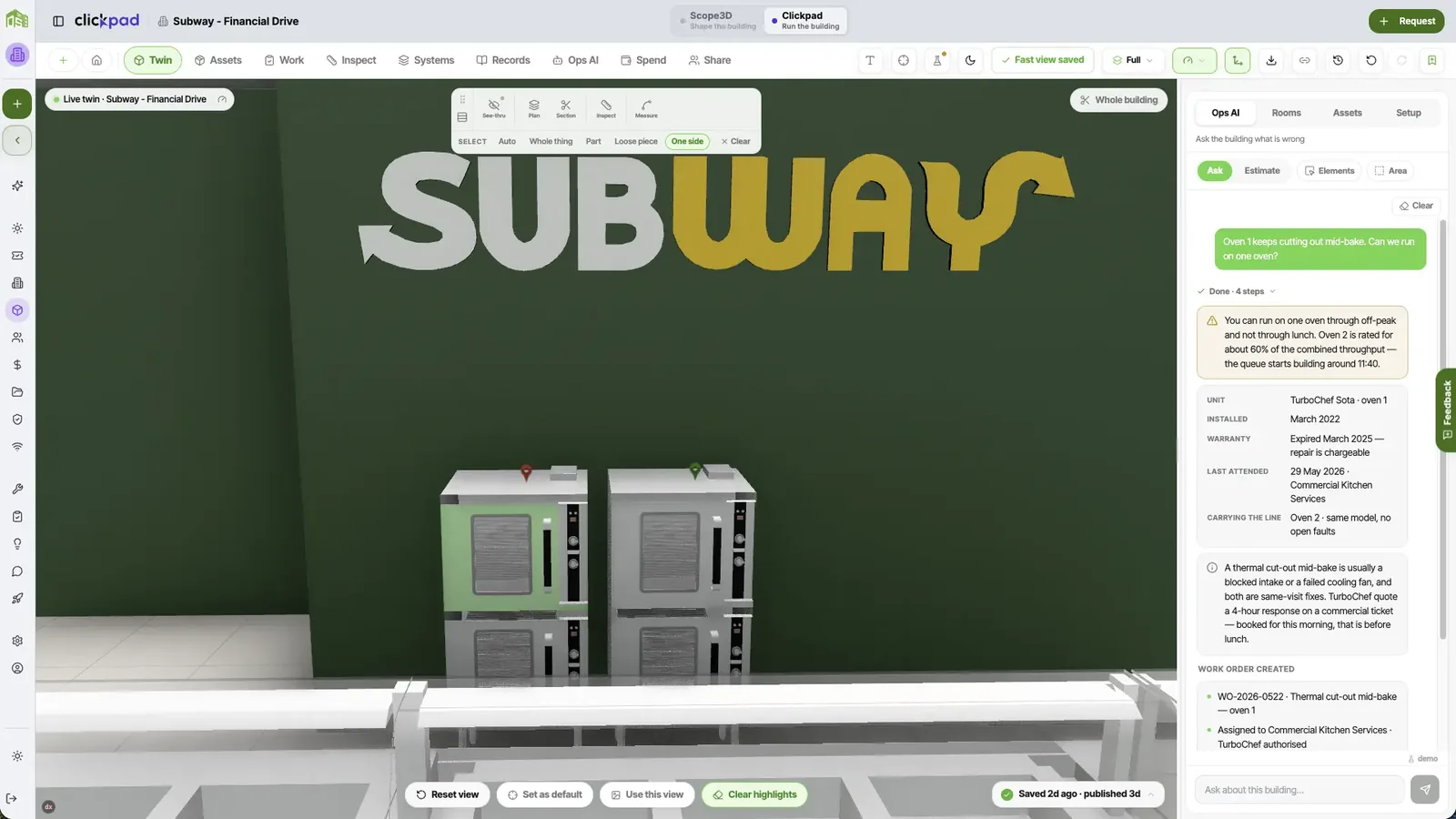
An asset page is not a specification sheet. The specs are on it, and under them sit the service logs and a history timeline: what was replaced, when, and against which job it was raised. The sub oven on the line reads as a sequence rather than a status — blower motor replaced, catalytic converter cleaned, door seal replaced for heat loss, then a deep clean and a recalibration after it. The two cycles it now takes to reach set point in the morning land against that history instead of arriving on their own.
Every asset also carries a section for what we do not know about it. A missing serial, no install date, no manual on file, a service interval nobody has confirmed. On the roof that is usually the things nobody writes down until they matter: when the membrane was last patched, who did it, whether anything on it is still under warranty. The gap is recorded as a gap rather than left as an assumption, so the register is honest about its own coverage.
The copilot is per property. Asked about the roof, it answers out of this restaurant’s register: 412 square metres of two-ply modified bitumen falling at 1:50 to four internal drains, eleven penetrations, thirty-eight metres of parapet, and whatever has been done to any of it since. A contractor pricing the work reads the same figures as the one before him, because there is only one set to read.
Maintenance runs off the same entries. Intervals live on the asset, so a unit that has gone past its own interval is visible as itself and not as a line in a schedule kept somewhere else. CapEx planning is a separate hub reading the same register — the assets, their ages, their histories and the work already done to them — so a roof replacement is scheduled against a measured surface and a written history rather than against the year somebody remembers it going on.