 Clickpad copilotScreenshot
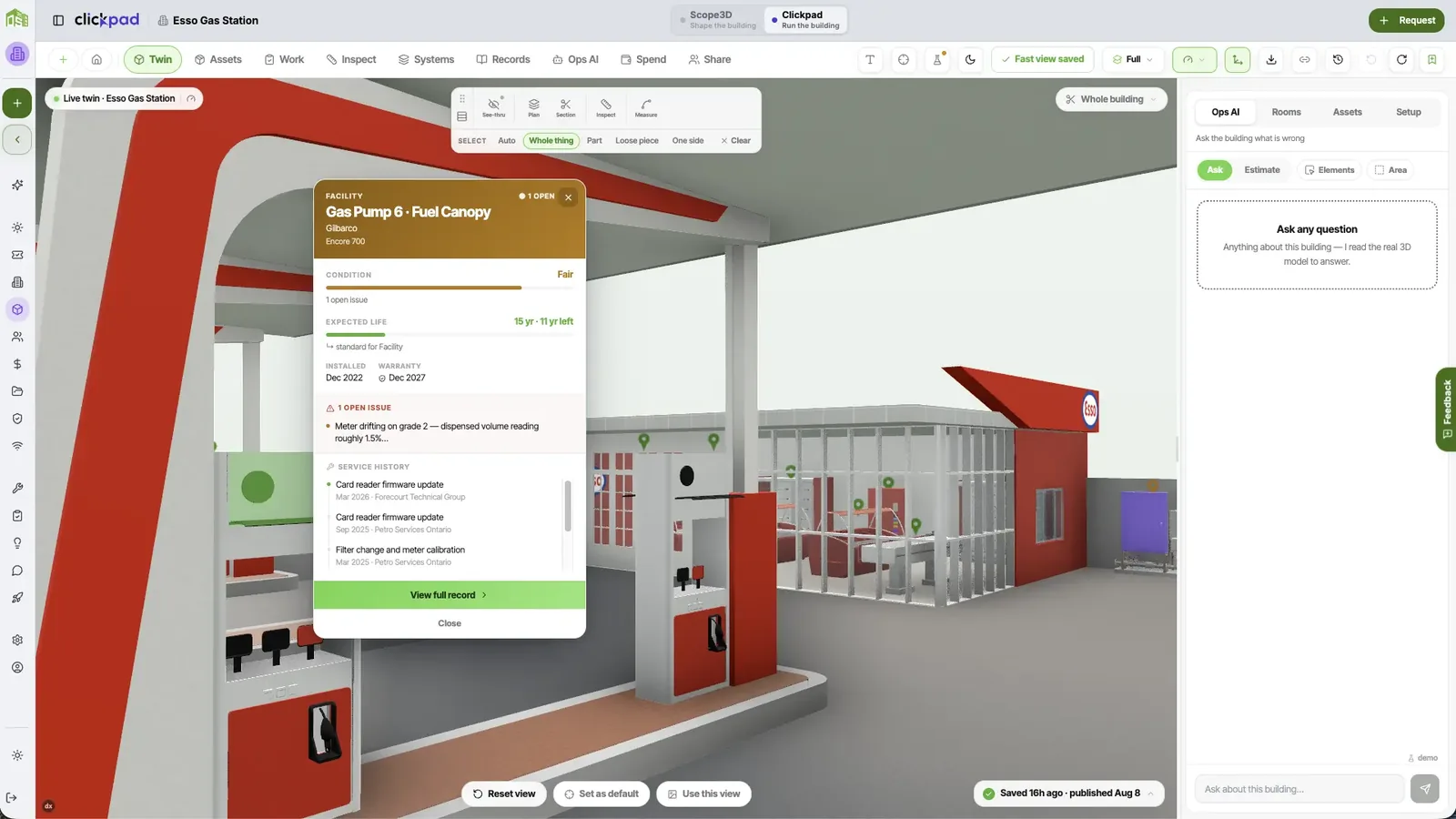
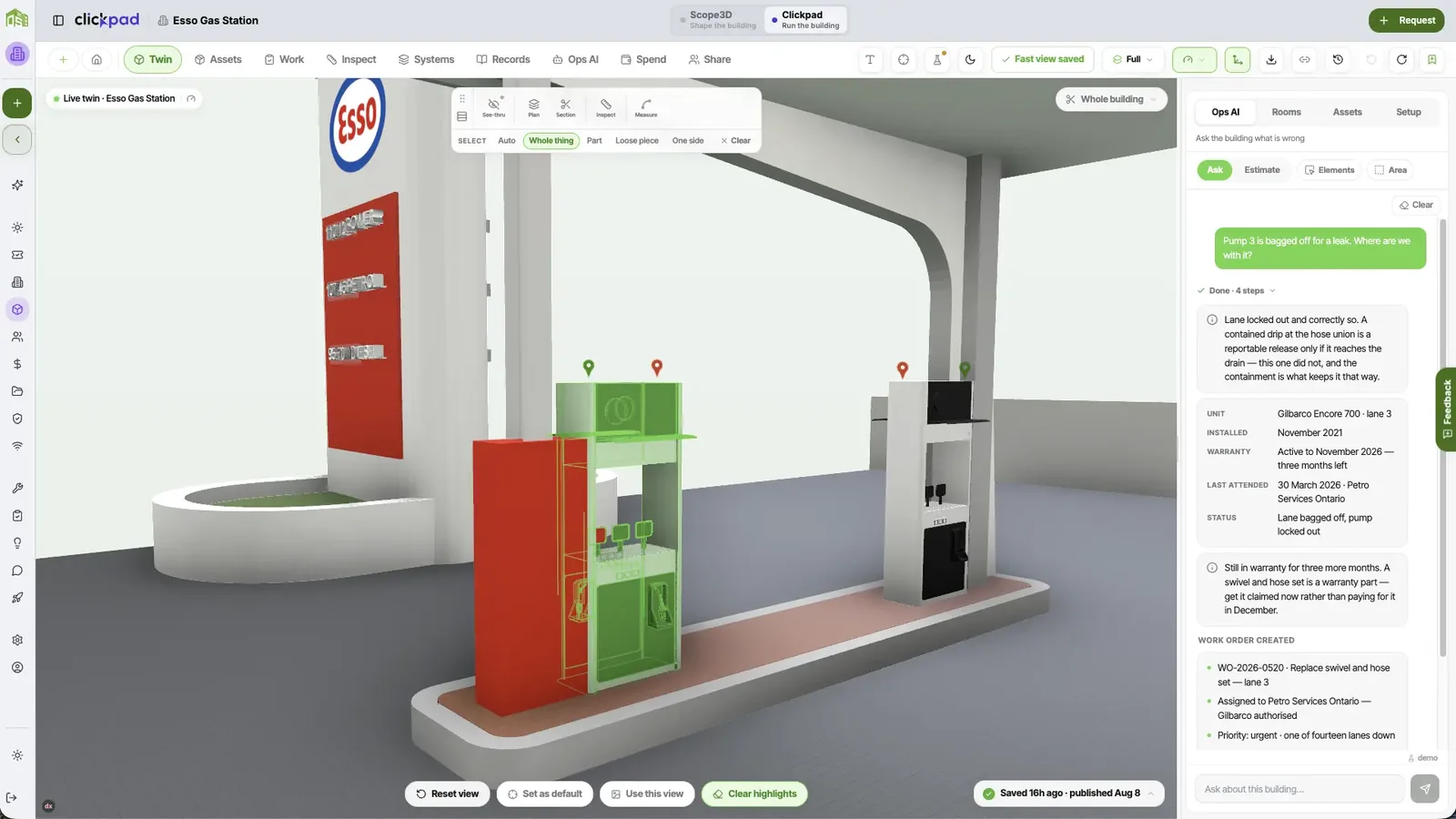
Esso sits in Clickpad as a register of 226 assets. The eight dispensers under the canopy, the canopy and its lighting, the forecourt services around them — air and water, the tire filling station — and the shop behind, each one entered against the place it actually stands, so it is opened from the forecourt rather than found in a row of a spreadsheet.
An asset page is not a specification sheet. The specs are on it, and under them sit the service logs and a history timeline: what was done, when, and against which job it was raised. The tire filling station on the forecourt reads as a sequence rather than a status — the compressor serviced, the coin mechanism cleared, the hose replaced, and the Measurement Canada calibration certificate filed against the unit itself. A gauge now reading 4 psi high against a reference gauge, and a crack in the hose near the chuck, land against that history instead of arriving on their own.
Every asset also carries a section for what we do not know about it. A serial nobody has read off a pump, no install date on a run of canopy lighting, no manual on file, a service interval nobody has confirmed, a certificate that has not been scanned in. The gap is written down as a gap rather than left as an assumption, so the register is honest about its own coverage and the holes can be closed on the next visit rather than rediscovered on the next fault.
The copilot is per property. Asked which pump is having card reader trouble, it answers out of this site’s register: the open reports group by the asset they were raised against, and they sit on one dispenser — three of them in six days, each left by a customer scanning the code on the pump in front of them. The same grouping is what rules the card network out, because nothing else on the forecourt has an issue open against it.
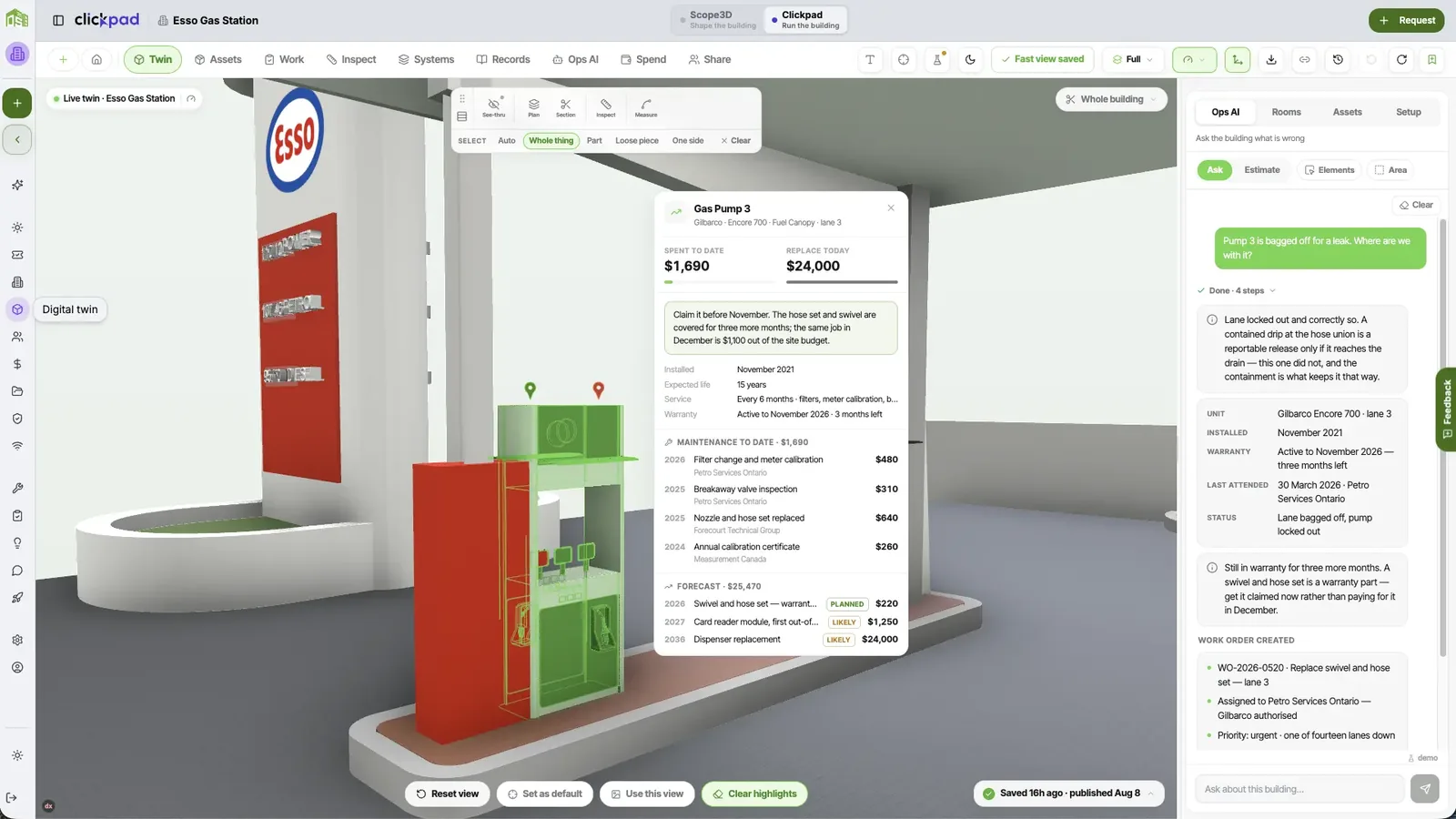
Maintenance runs off the same entries. Intervals live on the asset, so a dispenser past its own interval is visible as itself and not as a line in a schedule kept somewhere else, and calibration paperwork stays on the equipment it certifies instead of in a folder in the office. CapEx planning is a separate hub reading the same register — the assets, their ages, their histories and the work already done to them — so the dispensers and the forecourt around them are planned for against what is recorded rather than against what is remembered.