 Clickpad copilotScreenshot
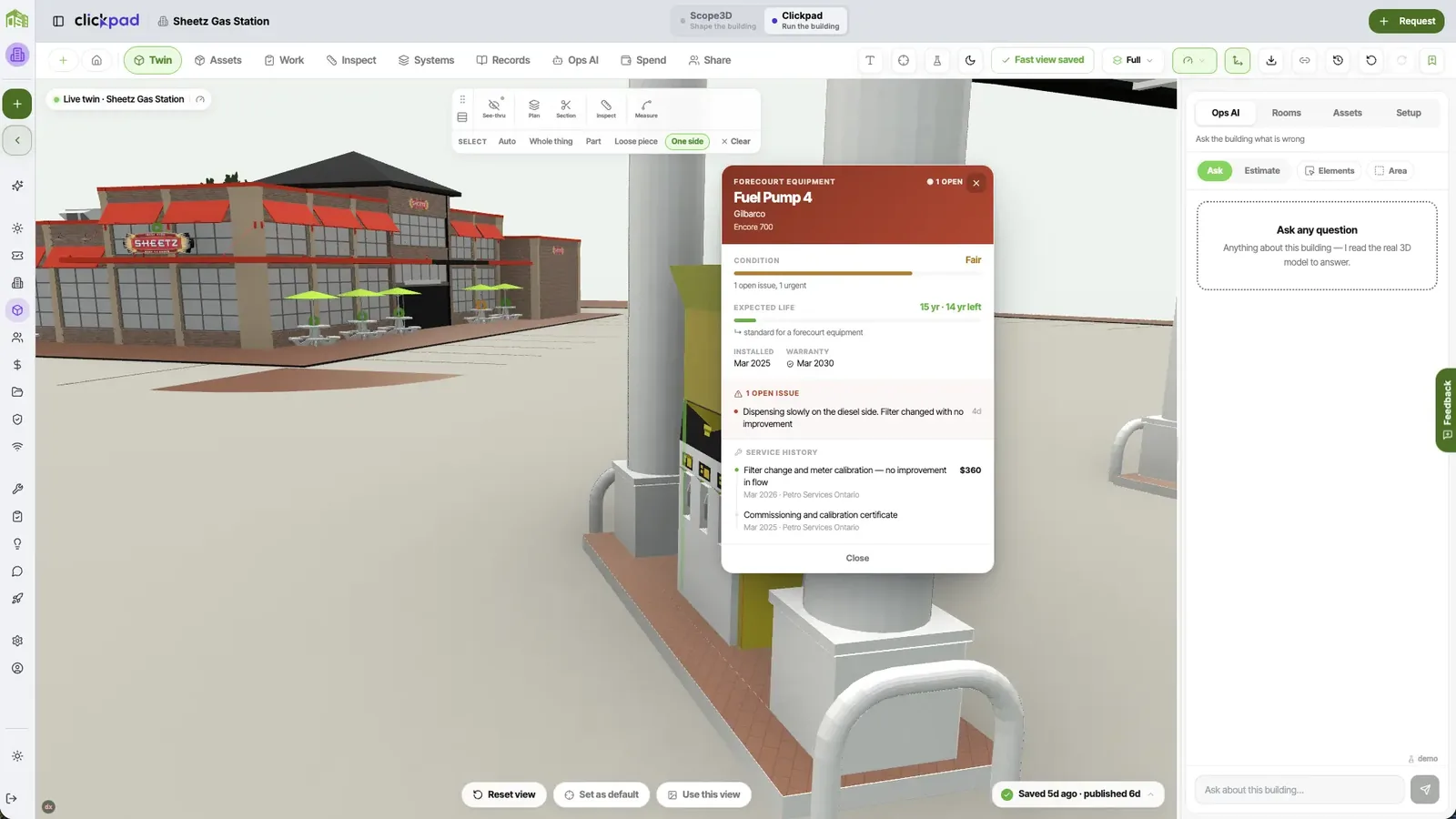
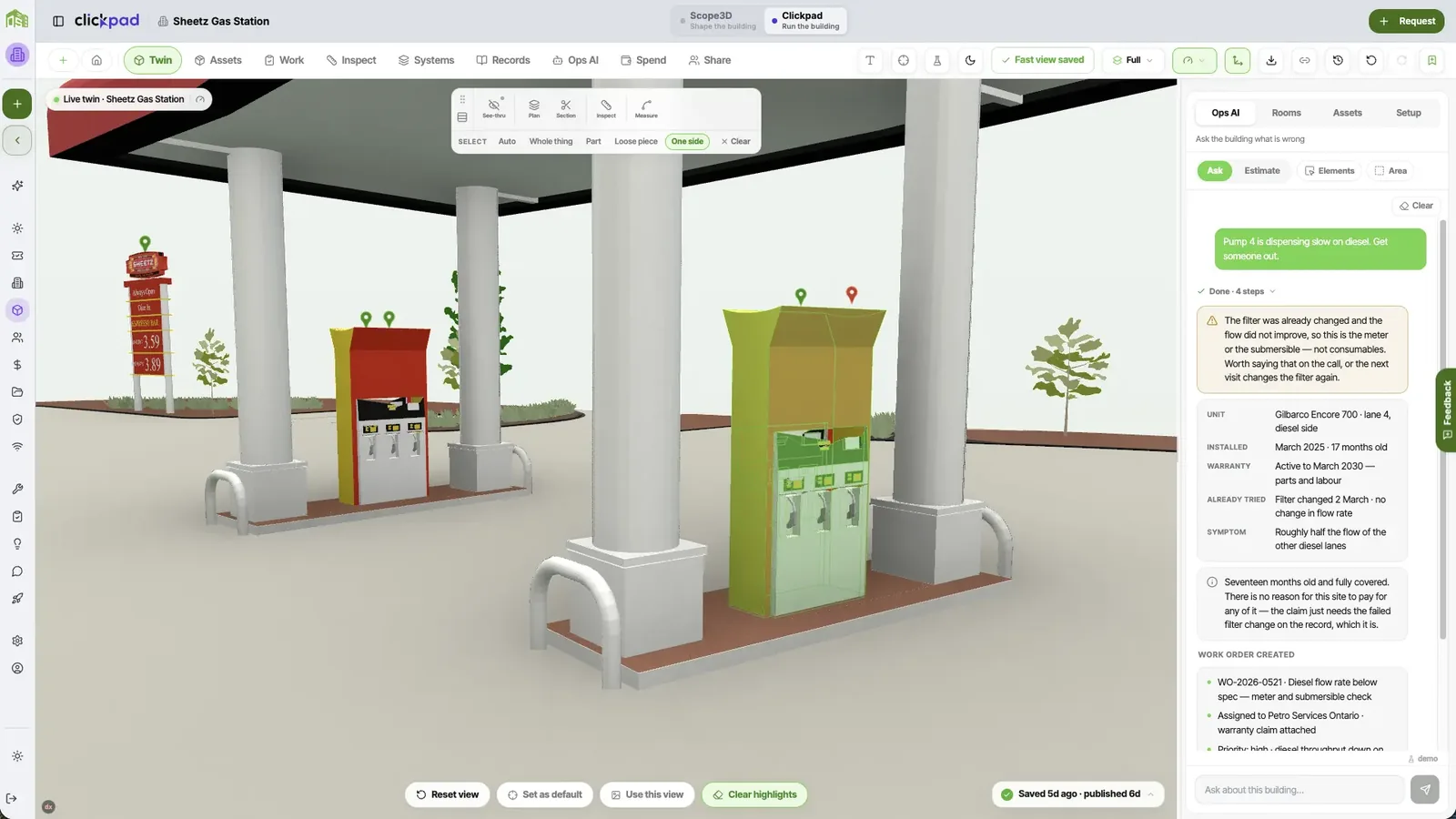
Sheetz sits in Clickpad as a register of 245 assets. The kitchen line and the refrigeration behind it, the coffee and beverage equipment, the dispensers and the canopy out on the forecourt, the price sign and the displays beneath it — each one entered against the place it actually stands, so it is opened from the plan rather than found in a row of a spreadsheet.
An asset page is not a specification sheet. The specs are on it, and under them sit the visits and a history timeline: what was done, when, and by whom. The forecourt price sign reads as a sequence rather than a status — the display controller reseated, an earlier flicker cured by replacing the driver, a relamp since, and the annual structural inspection filed against the same element. Digits that blank intermittently, and blank worse in the cold, land against that history instead of arriving on their own.
Every asset also carries a section for what we do not know about it. A serial nobody has read off the unit, no install date, no manual on file, a service interval nobody has confirmed. The gap is written down as a gap rather than left as an assumption, so the register is honest about its own coverage and the holes get closed on the next visit rather than rediscovered on the next fault.
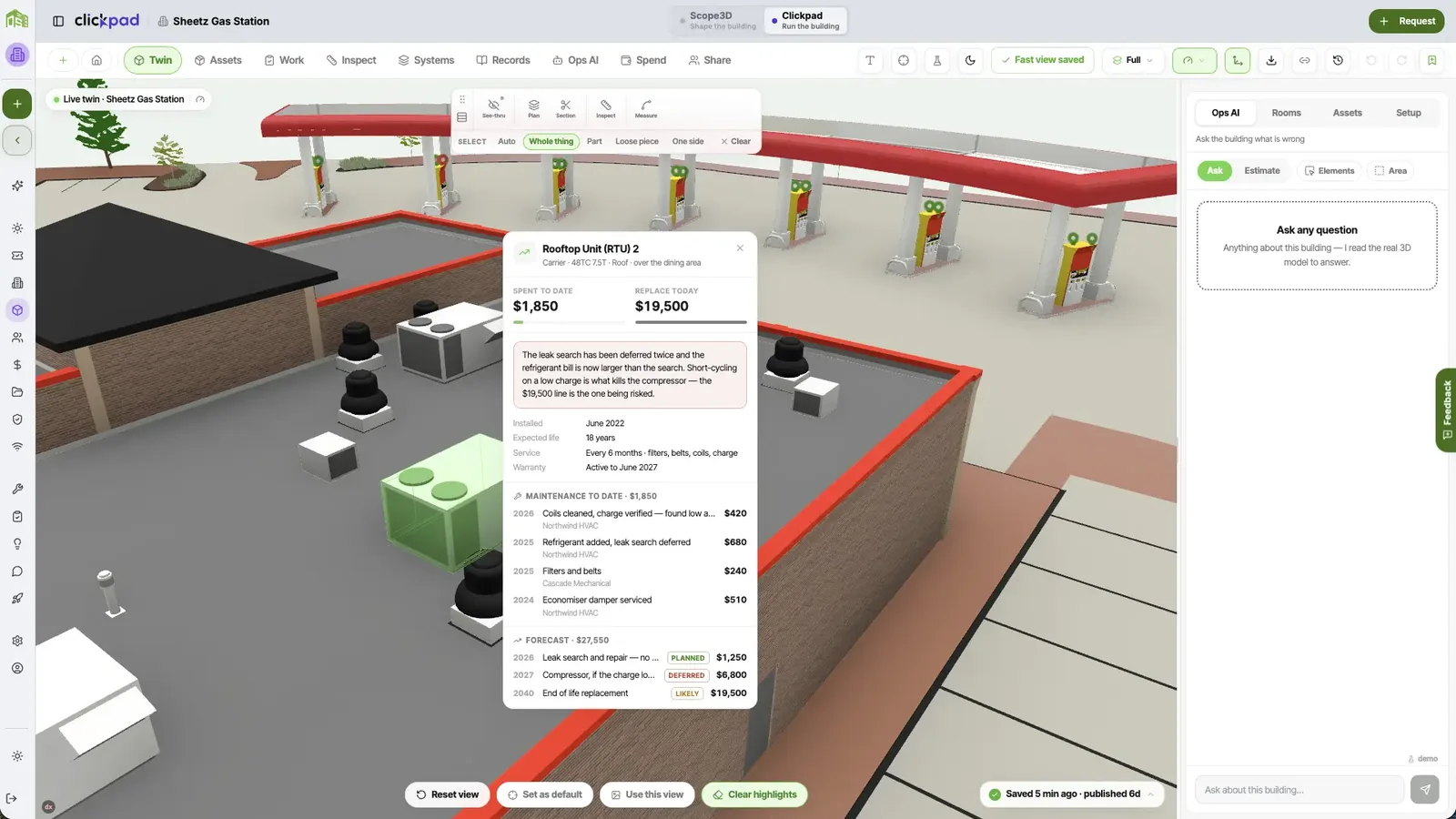
The copilot is per property. Asked when the air conditioning was last serviced, it answers out of this site’s register: the date of the last visit, the six month interval it was meant to run on, and the fourteen months that have passed since — two visits, missed quietly. It returns the note the technician left that day as well, a slow loss on the low side with a leak search recommended for the next visit. There was no next visit, and the recommendation is still attached to the unit it was written about.
Maintenance runs off the same entries. The interval lives on the asset, so a unit that has gone past its own cycle is visible as itself rather than as a line in a schedule kept somewhere else, and a recommendation left open is a reason to book rather than a guess. CapEx planning is a separate hub reading the same register — the assets, their ages, their histories and the work already done to them — so the years ahead are planned against what is recorded rather than against what is remembered.