Maintenance backlogs are born in the gap between noticing a problem and recording it. Somebody sees a fault, means to report it later, and by the end of the shift it is a note never written and a job nobody scheduled.
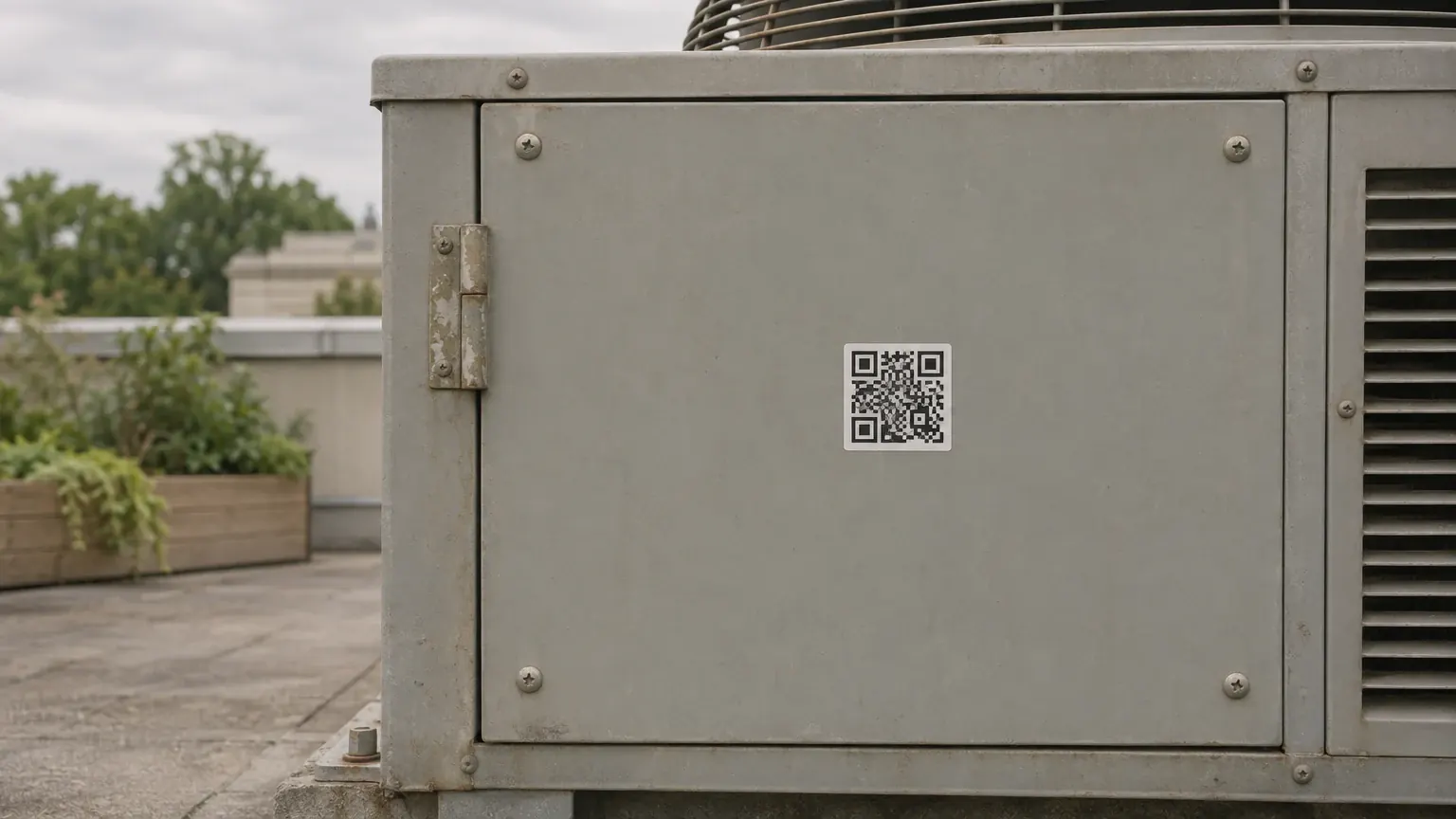
A tag on the asset closes that gap. Scan the QR code or tap the NFC tag with the phone already in your pocket, and the report lands in BuiltOS against that exact asset. No app to install, no account to create, no form asking which building you are standing in.
The scan carries what makes it useful later. It is geo-tagged, timestamped and tied to the asset's full service history, so the report arrives already knowing which unit it is and what has happened to it before.
That kills the most common failure in field reporting, which is not laziness. It is ambiguity. "The heater in the back room" costs somebody a phone call and a site visit to resolve. A scan is a location and an object.
Tags go where the public can reach them, which is where the reports are: a restroom at a fuel station, a hotel guest room, a lobby, a lift car. Anyone can scan and report without an account and without working out who to tell.
For inspections, the same tags turn a clipboard into a route. Each scan is a timestamped record of what was checked and when, which is the part that matters when a compliance question comes months later.
A tag beats a form on friction. Every extra step between noticing and recording loses reports, and the ones lost first are the small ones: the dripping tap, the flickering light, the door that has started to catch. Left alone long enough, those are the expensive ones.
There is a cultural effect too. When reporting is effortless, people stop saving it for problems bad enough to be worth the hassle. They report because it was easy.
Repaired.ai takes it from there. It is the AI agent: it opens the work order, attaches the asset's record and brings in the vendor, so the scan is the last thing the person on site has to do.
And every tag sits on the 3D model. Each tagged asset is pinned where it really is in the 3D model, so whoever is at a desk reaches the same record by clicking the thing itself.
Deployment is the only real work, and it repays care. Tag the assets that matter, not everything, and put each tag where the person who notices the fault will be standing when they notice it.
After that, reporting takes care of itself. The best field process is the one nobody has to remember.