Capital plans usually start as a spreadsheet built from memory. Somebody who knows the building lists what is getting old, guesses what it will cost to replace, and spreads the guesses across the years the business budgets in. Better than nothing, and very hard to defend.
The weakness is not the arithmetic. It is that no line traces back to anything real. When a number is challenged in a budget meeting there is nothing behind it but the person who typed it, and when they leave, the plan cannot be audited at all.
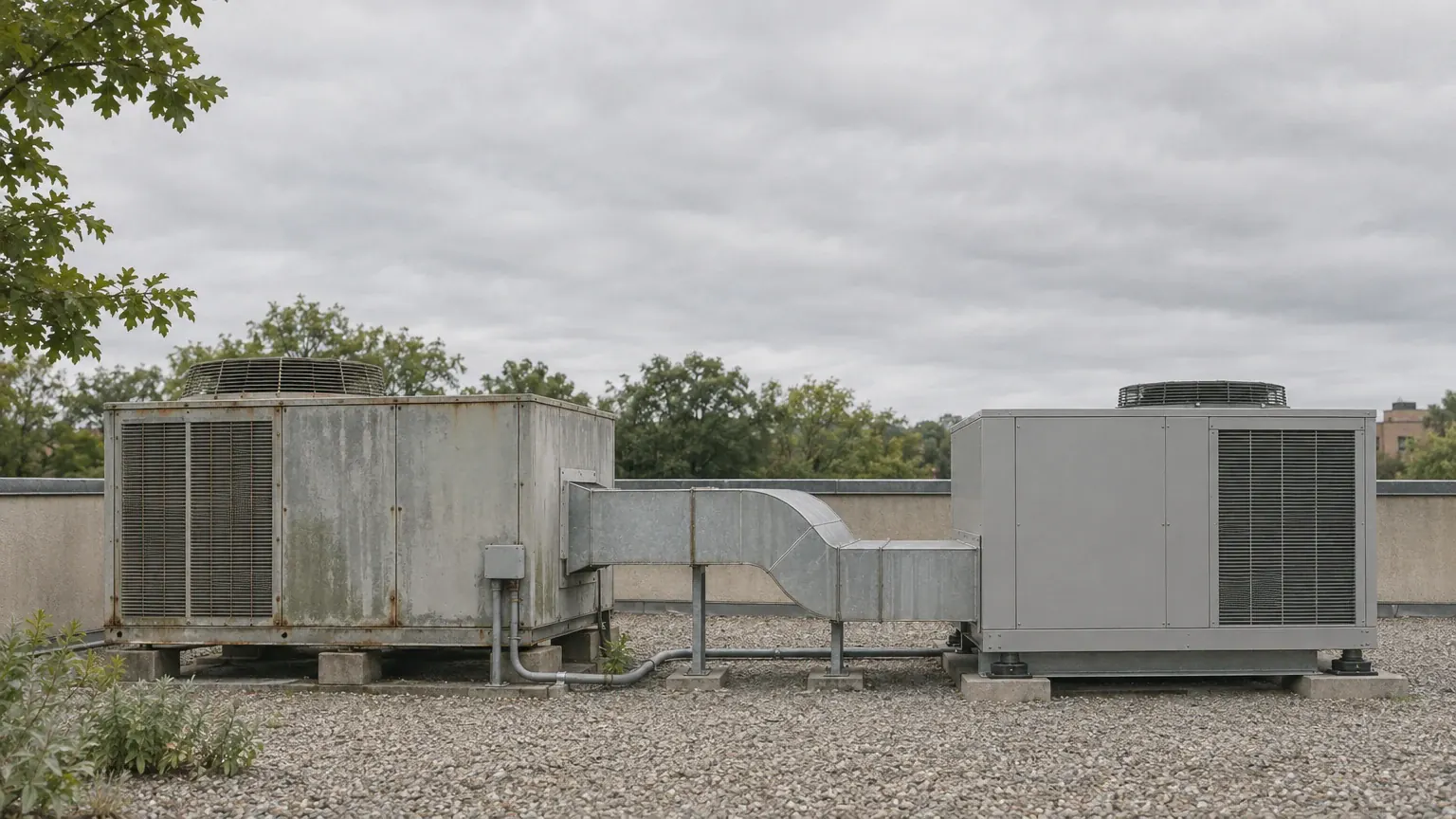
Planning off the 3D model flips that. Each line is attached to the element it refers to, so the rooftop unit due for replacement is a specific unit, in a specific place, with an install date, an expected life and a service history behind the number instead of a recollection.
Those two facts are enough to forecast without guessing. Install date plus expected life gives a replacement year, and the plan is built from the assets actually nearing the end of their service, not the ones somebody remembered in the meeting.
The plan can move without falling apart. Pull a replacement forward a year because something failed early, and both years' totals update at once, because the number was never a hand-typed constant to be edited in several places.
That anchoring is what makes the plan defensible in a room of people who did not build it. Asked why a figure is what it is, open the element: its age, what the last repair on it cost, and the quote behind the estimate.
And it connects to the work instead of sitting beside it. If equipment fails ahead of schedule, a line in a future year becomes a work order today in BuiltOS, without leaving the plan or re-entering anything into a system that does not know the plan exists.
Owners who run this way stop discovering capital work. The failures that used to arrive as emergencies, quoted at emergency prices, at night, by whoever answers, show up in the forecast ahead of time. That is the point of having a forecast.
It compounds. Every repair logged against an asset sharpens the forecast for that class of asset across the portfolio, so a company with a few years of its own history can price its replacements better than any industry average.
Be clear about what it does not do, because software like this gets oversold. It does not price the market for you or know what your contractors charge in your region this year. You set the rates, and you own the call on whether an asset is worth repairing or replacing.
What it removes is the part where nobody can say which building a number came from: the part that gets capital plans quietly rewritten every year instead of carried forward and improved.