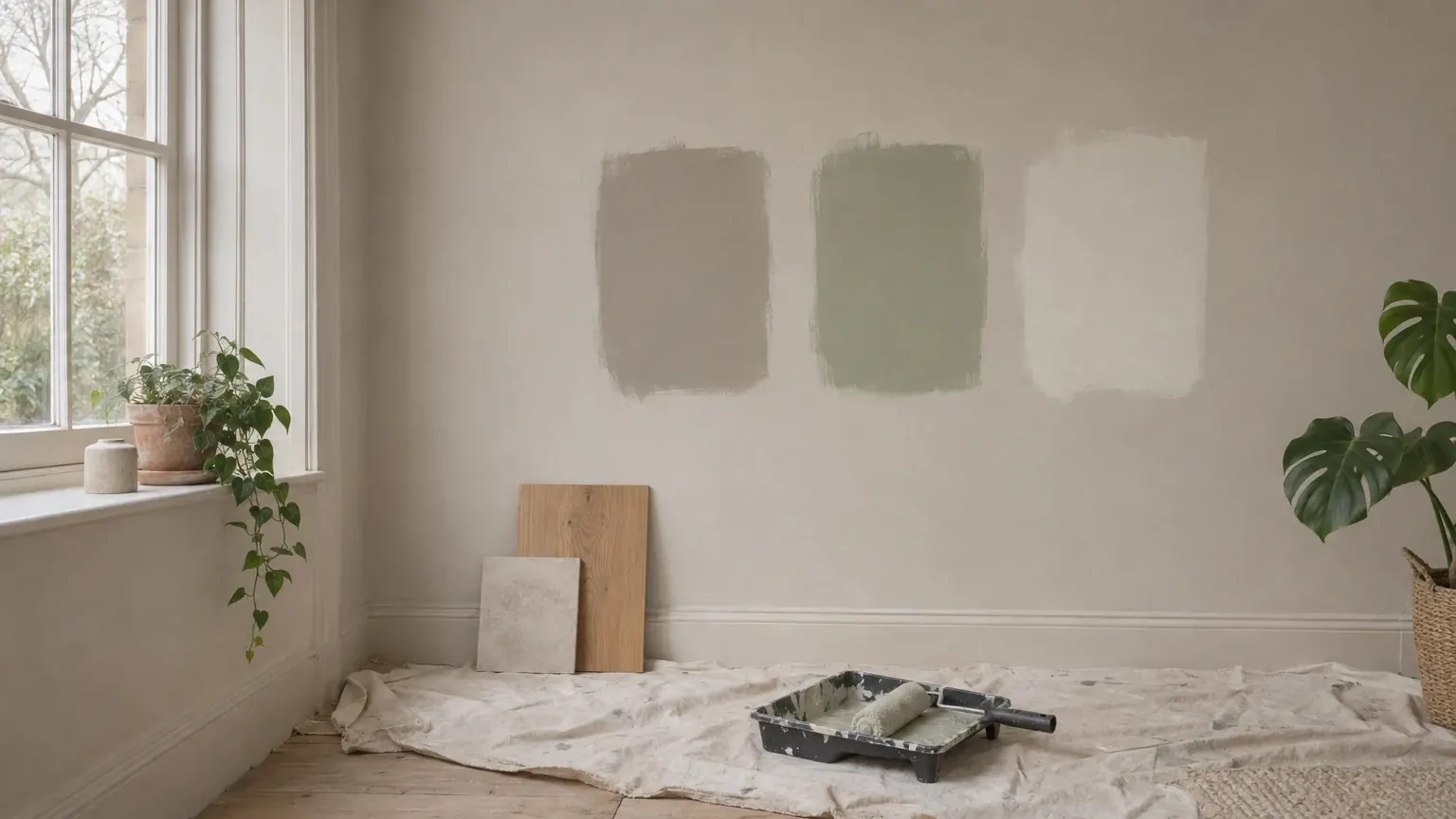
A finish chosen from a sample board is chosen in the abstract. The colour is right in your hand and wrong in the room, the sheen changes under the lighting actually installed, and the quantity is somebody's estimate off a plan rather than a measurement off the building.
Put the finish on the 3D model and both problems go. The material lands on the real surface, in the real room, at its real size. Because the model already knows that surface's area, the quantity updates the moment the choice changes.
It works per room or per element, which is how refits are actually specified. One floor takes one specification, three rooms take another, and the model holds both. No side schedule of exceptions going stale the first time somebody changes their mind.
The finishes are not a rendering trick. Each one is written onto its element as a material plus a property set, so the model exports with every surface named and schedulable, not just looking right on a screen in a meeting.
That is what survives the handoff to the people doing the work. Revit imports the IFC and reads the finishes as data, so the contractor pricing the job sees the specification the owner chose, on the same element, instead of a description in an email.
Pricing comes from the same place. Each line item is anchored to its element, so a cost traces back to the door or the wall it came from, not to a spreadsheet row nobody can reconstruct when the number is challenged.
So a refit conversation stops being about taste. Put two options on the same room, look at both in place, read the quantity and cost difference, and an argument about preference becomes a decision about money.
The record outlasts any specification document. Years later the surface still carries what was applied, who applied it, when, and the warranty term. Ask BuiltOS who painted the entryway and it answers from the surface itself, warranty included.
The failure this prevents is specific and common. Paint fails first at an entryway because it is the wet part of a dry elevation. Without a record, the only move is to repaint with the same specification that failed, because nobody knows it was wrong for the exposure.
None of it needs a specialist or a separate tool. Materials is a mode on the same model: nothing is remodelled, nothing is lost when you switch back out, and whoever picks the finish does not have to learn CAD.
Specify in the model, not beside it. Anything specified beside the model has to be reconciled with it eventually, and that is where quantities and warranties quietly go missing.